I was reading an article on Monday from the CNBC website entitled ‘Here’s how you’ll be safely shopping for clothes as stores begin to reopen’ whilst it went on to list some of the measures retailers are taking at no point did it reference technology such as 3D body scanning or Augmented Reality.
There is no doubt that we are already seeing, in countries which have loosened their lockdown measures, shoppers being hesitant to return to Malls and High Streets, a reticence to purchase and where fitting rooms are open, to try anything on. Personally, I hate trying on clothes at anytime and quite frankly, right now, anything less than a professionally sanitised space after each customer visit will not do!
Apparently ‘I’m not alone’ – ‘Sixty-five percent of women said they will not feel safe trying on clothes in dressing rooms, due to the Covid-19 crisis, according to a survey by retail predictive analytics company First Insight. The firm fielded 1,066 responses from consumers on April 30. Meantime, 54% of men will not feel safe using dressing rooms, the survey found.’
Some of the global retail solutions being undertaken are great but dull, where is the retail innovation, the opportunity to create theatre as well as convince the customer that YOU have their best interests at heart. I realise this requires investment at a time when cashflow is limited or non-existent, but the potential far outweighs the initial capital expenditure.

So what?
Macy’s will open a few fitting rooms and like Gap will hold all merchandise tried on or returned for 24 hours, Gap will close its fitting rooms. Sanitizing systems using ozone-based technology is currently being tested as effective against Covid-19 specifically, Matt Kain, the Indiana-based Global Ozone Innovations’ executive vice president, said. Or killing Covid-19 with ultraviolet light is another option retailers are looking at, according to lighting company Healthe.
According to the First Insight survey, about 49% of millennials said they would not feel safe trying on clothes in dressing rooms after the pandemic. But the percentage was much higher for baby boomers, at 71%.
All the way back in 2005 retailers such as Levi Strauss and Gap were testing Body Scanner technology and whilst it had its faults then, fifteen years later technology has moved on a long way, and we see the move into this space from online retailers not physical stores. Why?
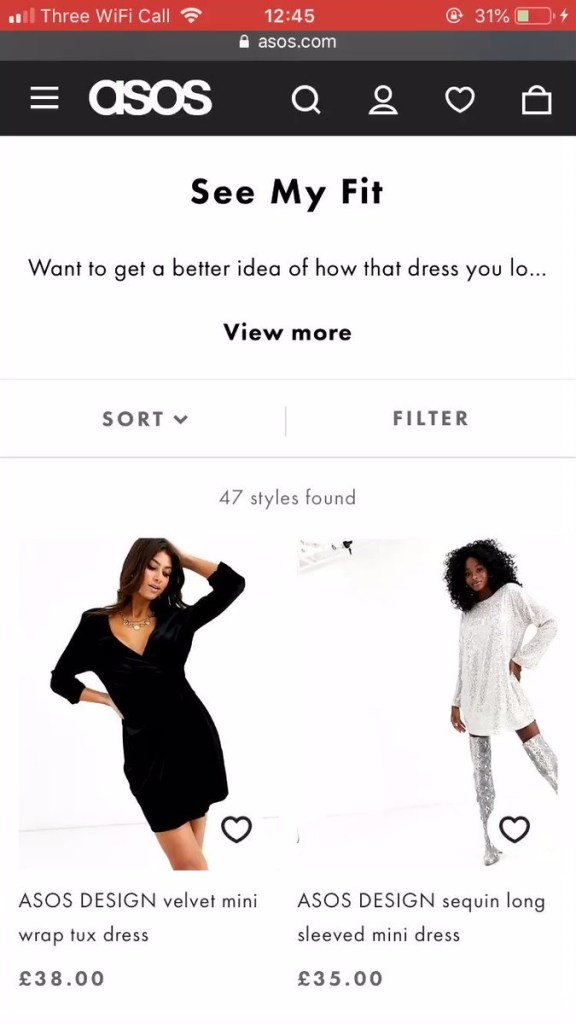
In January of this year ASOS launched ‘See My Fit’, partnering with Israeli AR company Zeekit to offer customers a simulated view of a product in different sizes and on different body types. The tech helps customers make more informed purchasing choices, by using AR, to better show how products look on models that more closely reflect individual customers. ASOS was the first retailer in Europe to trial the technology. Simply by clicking the ‘See My Fit’ button on one of the 800 dresses involved in the trial, ASOS customers were able to choose to view that dress on a range of 16 models in sizes 4 to 18*. When a customer selects a model, See My Fit digitally maps the product onto that model in a realistic way, taking account of the size, cut and fit of each individual garment. The resulting images appear similar to real photographs. ASOS also introduced Fit Assistant in 2018, which uses machine learning to deliver personalised sizing to customers and in June 2019, ASOS tested Virtual Catwalk, an AR experience allowing customers to view models as if they are walking in the room with them. More than 150,000 customers tried ‘Virtual Catwalk’ during the trial, which was only available on a selection of 90 ASOS Design products on AR-enabled iOS devices.
‘Redthread’ was founded by former VP, Meghan Litchfield, to find a way to shop that was not demoralizing, the humiliation of walking into a dressing room with half a dozen options only to walk out empty-handed because nothing fitted properly. ‘Redthread’ makes bespoke clothing for anyone with a smartphone. Customers choose an item from the website, fill out a “fit quiz,” and capture a series of full-body photos with their phone. ‘Redthread’ pulls 3D measurement data from those photos and, combined with a customer’s fit preferences, creates a made-to-order item. Litchfield hopes it will upend the way clothes are bought, sold, and designed in the future. ‘Redthread’ licenses its photographic measurement technology from a company called ‘Cala’, which lifts 15 exact measurements from the pictures the customer sends in. The company then uses those measurements to tailor a garment in a dozen or so places before shipping it out.
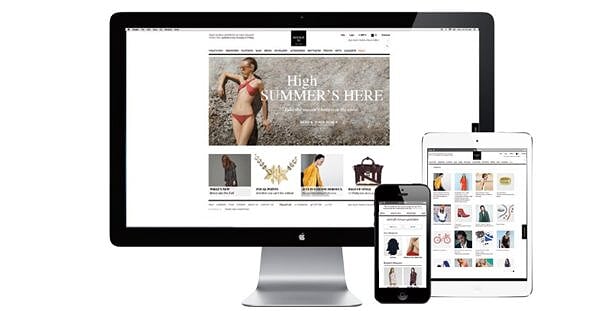
Take away the bespoke product element and in an omni-channel, Covid-19 world, body scanning technology could allow consumers to shop in-store or online using precise fit measurements without trying on, setting the stage for some serious industry disruption. In a report from October 2018, Morgan Stanley Research analysts were already examining how this new technology would allow consumers to virtually try on clothing to find the best fit. Retail has been slow to invest, and this has now come back to ‘bite them on the proverbial’.

“Trying on clothes and determining measurements is, at its core, simply an exchange of data between the consumer and retailer. It’s one that could be more accurate and efficient”, argued Geoff Ruddell, head of Morgan Stanley’s pan-European General Retail team. “Trying clothes on to see if they fit is an antiquated and very inefficient data exchange, and one which technology appears to have the potential to improve,” Ruddell says. “And it is pretty clear, from the number of start-up scanning apps already in existence, that Silicon Valley has recognized that there may be a significant commercial opportunity here.” That opportunity is tied to new technologies that allow consumers to take 3D scans of their bodies using their mobile phones. Some existing apps already allow consumers to use the cameras on their mobile devices to create 3D images of themselves via a series of 2D selfies, but the technology is rapidly improving.
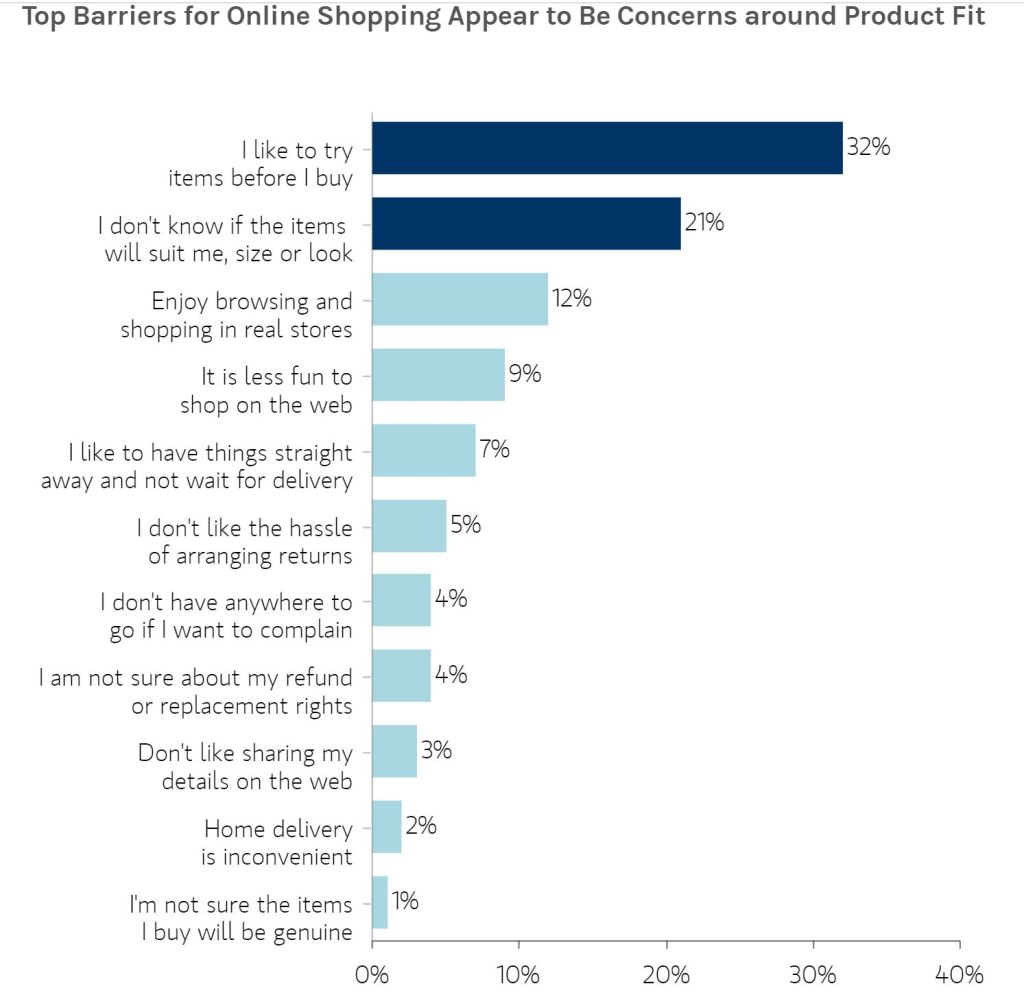
The possibility of encouraging customers to communicate their measurements from a 3D scan, either to an online store prior to purchase or have a ‘fit wallet’ on their phone, which would then match with appropriate clothing sizes in-store, would be revolutionary. If retailers already have digitized 3D shapes of their ranges and could overlay those specifications with the body image of the consumer a la ASOS then a visit to the fitting room becomes obsolete…hooray to that! While retailers could benefit from the vast amount of granular body-shape data and create more accurate sizes based on actual customers; a more immediate benefit would be a reduction in the costs of returns – shipping and logistics for online and improved range planning and space productivity for physical retail. But most importantly 3D scanning could unlock the ultimate prize right now, leading the way in shopper safety, bringing a nervous customer back to store to purchase.
https://www.cnbc.com/2020/05/11/coronavirus-how-to-safely-shop-for-clothes-as-stores-reopen.html
https://redthreadcollection.com/
https://www.morganstanley.com/ideas/3d-scanning-apparel
 Susan Hewlett